Let me tell you something I've been thinking about for a long time.
Years ago, Art Bell used a phrase on his show that I never forgot. He called it the Quickening — this idea that history itself was speeding up. That the space between major events was getting shorter. That technology, culture, upheaval — all of it — was accelerating in ways that didn't feel entirely natural.
Some people thought he was being dramatic.
Nobody's laughing now.
I live in Nashville. In 2010, a once-in-a-thousand-year flood put Middle Tennessee underwater. The national media barely noticed — the Gulf oil spill owned the cycle. The city rebuilt itself alone. That was the first time a lot of people around here realized: nobody's coming to help.
Ten years later — March 2020 — a tornado tore through the city at night. Two weeks after that, COVID shut everything down. We were still clearing debris when the lockdowns started. Two catastrophes with no breathing room in between. And the national conversation had already moved on before we finished sweeping.
That's the Quickening. Not a theory. Not a headline from the other side of the world. Your backyard.
Here we are in 2026, and machines are writing novels, passing medical exams, and carrying on conversations that fool the people talking to them. That didn't happen gradually. It happened like a light switch.
Right now — tonight — someone's phone is going to ring, and on the other end will be the voice of their daughter or their mother. Panicked. Crying. Begging for help. And it will sound exactly like them. Because an AI cloned their voice from a thirty-second clip on social media, and a stranger is using it to demand money.
That person's voice is a weapon now, and they don't even know it.
Walk the timeline forward ten years and the engineers will tell you — on the record — that the robotics being developed right now will wear synthetic skin you can't distinguish from the real thing by touch. Machines built to look like people. To feel like people. To replace people. Not in science fiction. In the same decade your kids are finishing school.
The Quickening is in your house.
Meanwhile, governments around the world now openly acknowledge that there are objects in our skies that no nation on Earth claims to have built. Military pilots describe craft that move in ways our best physics can't explain. Congressional hearings are held. Pentagon officials go on the record.
And then… nothing.
It trends for a day. It's gone. Buried under the next outrage cycle.
We may be in possession of evidence that we are not alone in this universe, and the world can't hold the thought for forty-eight hours.
That tells you everything you need to know about the world we're living in.
The noise is not a side effect. The noise is the system. Endless feeds. Endless content engineered not to inform you but to keep you reacting, scrolling, and — above all — not thinking. Attention is the most valuable commodity on the planet. More valuable than oil. And there are billion-dollar systems designed to capture yours and hold it hostage twelve hours a day.
There was a time when radio was different. When you could turn a dial late at night and find someone actually talking. Not performing. Not selling. Following an idea wherever it went. Long-form conversation. Real silences. The kind of radio where a guest could take five minutes to build a thought, and nobody cut them off because the segment was running long.
It wasn't ideological. The best late-night radio was about curiosity — asking the kind of questions polite society had decided were off-limits, and sitting with whatever answers showed up.
The best conversations happened when everybody stopped pretending they had all the answers.
That kind of radio is almost gone. The stations are corporate. The hosts are interchangeable. The rough edges — the very things that made radio dangerous and alive — have been sanded down to nothing. Somewhere along the way, somebody decided the host of a late-night talk show should wear a suit and tie. A suit and tie. To talk into a microphone. At midnight. Art Bell had a word for that kind of thinking, and it wasn't polite.
Real radio is a host super-gluing his lips together during a break, prying them apart on air, and laughing about it with the audience while the whole thing goes sideways. That's not a bit. That's not planned. That's what happens when the show is alive and nobody's standing in a control room with a kill switch and a corporate handbook. That's the show I grew up listening to. That's the show I'm building.
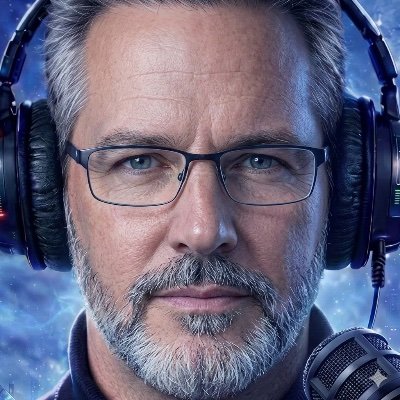
Night Airwaves is live, independent talk radio. A real signal moving through the real night air in real time. No corporate owner. No programming director. No algorithm deciding what you hear next.
Just a microphone, an open line, and the kind of questions that surface at two in the morning when the world finally gets quiet enough to think.
Not answers. Not opinions. Not hot takes. Questions. The kind that don't fit in a headline. The kind that keep you awake at three in the morning staring at the ceiling.
That's where this show lives. Three in the morning. Ceiling. Wide awake.
If you've been feeling it — the acceleration, the noise, the sense that there are enormous questions hiding just beneath the surface of everything — you already know why you're here.
Stay with me.
The night is young. And there's a lot to talk about.